
Sentiment
The Subnet Sentiment Index is a composite score (0–100) that measures market sentiment for each subnet on the Bittensor network. It replaces the previous Fear & Greed Index with a more nuanced, multi-factor approach.
How It Works
The SSI combines seven components, each capturing a different dimension of market sentiment. All components are scored 0–100 using sigmoid smoothing, then combined with fixed weights:
Components
1. Buy/Sell Pressure — 25%
Measures directional conviction by combining two ratios:
- Volume ratio (60% weight): Buy volume ÷ total volume over the last 24 hours. A ratio above 0.5 means more TAO is flowing into buy-side trades.
- Participant ratio (40% weight): Unique buyers ÷ total unique participants over 24 hours. This prevents a single large trade from skewing the score — broad-based buying is a stronger signal than one whale.
The blended ratio is mapped through a sigmoid function centered at 0.5.
Interpretation:
- High score → majority of volume and participants are buying
- Low score → selling dominates
- Near 50 → balanced market
2. Price Momentum — 20%
A weighted blend of price changes across four timeframes:
| Timeframe | Weight |
|---|---|
| 1 hour | 10% |
| 1 day | 30% |
| 1 week | 40% |
| 1 month | 20% |
The weekly timeframe carries the most weight to capture meaningful trends while filtering out hourly noise. A +5% daily move means something different in the context of a -20% weekly decline versus a +30% weekly rally.
The blended momentum value is passed through a sigmoid function centered at 0 with a scale of 0.08.
3. Volume Trend — 15%
Compares current 24-hour volume against the 7-day average, then adjusts for price direction:
| Volume | Price | Interpretation |
|---|---|---|
| Above average | Rising | Conviction buying — greed signal |
| Above average | Falling | Capitulation — fear signal |
| Below average | Rising | Quiet accumulation — mild positive |
| Below average | Falling | Apathy/drift — mild fear |
This matters because rising volume isn't inherently bullish or bearish — it's a measure of conviction. The price direction reveals which conviction.
4. Tao Flow — 15%
Tracks capital movement through two lenses:
- Staked ratio (60% weight): Alpha tokens staked vs. tokens in the pool. A higher staked ratio means holders are locking tokens up rather than keeping them liquid to sell — a conviction signal.
- Liquidity trend (40% weight): Change in pool liquidity over 7 days. Growing liquidity indicates capital inflow; shrinking liquidity signals outflow.
This is often considered the "smart money" signal. Price can be moved short-term by a single large trade, but capital flow patterns across a week are harder to fake.
5. Emissions Yield — 10%
Evaluates validator yield attractiveness, adjusted for market context:
- Base score from the stake-weighted average APY of the top 10 validators
- Price trend modifier: High yield with a rising price = genuine demand (full score). High yield with a falling price = potential "farm and dump" pattern (discounted score).
- Epoch participation health as a secondary factor
This component catches a common pattern: subnets where validators earn strong rewards but immediately sell, creating downward price pressure despite seemingly attractive yields.
6. Rank Momentum — 10%
Captures a subnet's position relative to the broader ecosystem:
- Rank change (40% weight): Movement in subnet ranking over 7 days. A ±3 rank shift is considered significant.
- Market cap change (60% weight): Daily market capitalisation change as a percentage.
A subnet improving its rank means it's gaining market share relative to all other subnets — not just going up in isolation.
7. Participation Breadth — 5%
A quality modifier that measures how distributed trading activity is:
- Diversity: Trades per unique participant — lower is better (more individual decision-makers rather than a few accounts trading repeatedly)
- Market thickness: Total unique participants, where higher counts indicate healthier markets
Thin markets with few participants have their score pulled toward neutral/fear, reflecting the inherent uncertainty of low-activity subnets.
Sigmoid Smoothing
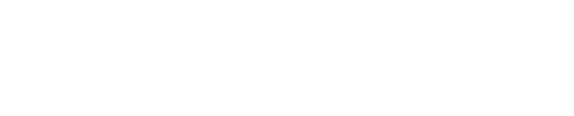
Every component uses a sigmoid function rather than linear scaling:
This provides:
- Smooth, bounded output — no hard clipping at 0 or 100
- Diminishing sensitivity at extremes — a single outlier metric can't dominate the overall score
- Symmetry around neutral — equal sensitivity to fear and greed signals
Data Sources
Each subnet's SSI is calculated from three data points:
| Data | Source | Used For |
|---|---|---|
| Current subnet snapshot | Subnet Pool API | Price, volume, buy/sell stats, rank, liquidity, staking ratios |
| 7-day historical data | Pool History API | Volume averages, liquidity trends, rank changes |
| Validator performance | Validator Yield API | APY calculations, epoch participation |
Interpreting SSI
The SSI is designed to differentiate between subnets. A subnet in "Greed" territory (61–80) has genuinely strong multi-factor momentum — it's not just one metric pulling it up.
Some patterns to look for:
- High SSI + high volume: Strong consensus bullish sentiment
- High SSI + low volume: Quiet accumulation, potentially fragile
- Low SSI + high volume: Active selling/capitulation — could signal a bottom or continued decline
- SSI divergence from price: If SSI is declining while price holds, underlying fundamentals may be weakening
The SSI updates with each data refresh and is available on every subnet page on Taostats.
Updated 16 days ago