
MEVbots explained
why do we need mev shield, and how does it work?
Maximum Extractable Value (MEV) bots scan the chain and look for transactions to "steal" assets from. There have been a number of approaches to hinder these Bots from operating on chain.
When a transaction moves through a liquidity pool, there is an opportunity for slippage: where another transaction precedes your transaction, changing the price and affecting the amount of tao/alpha you receive.
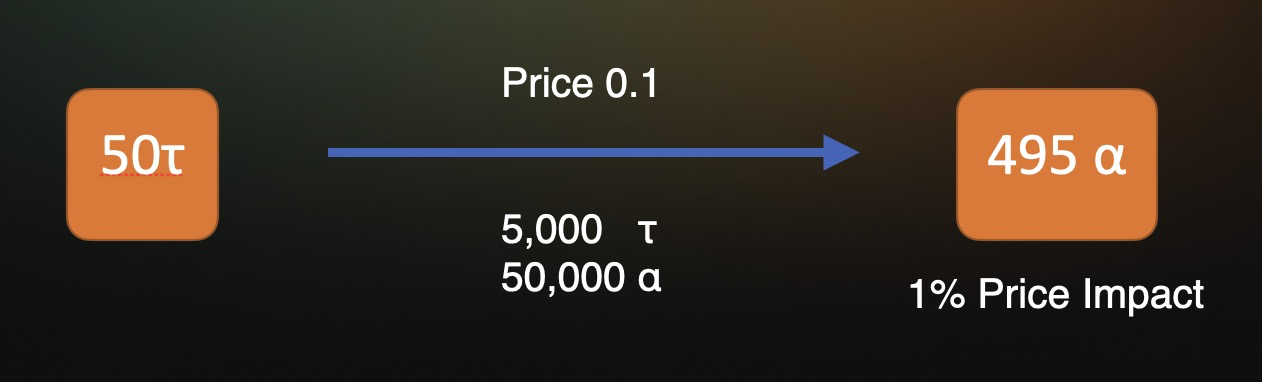
ExampleAn isolated transaction will have a small price impact due to the liquidity pool
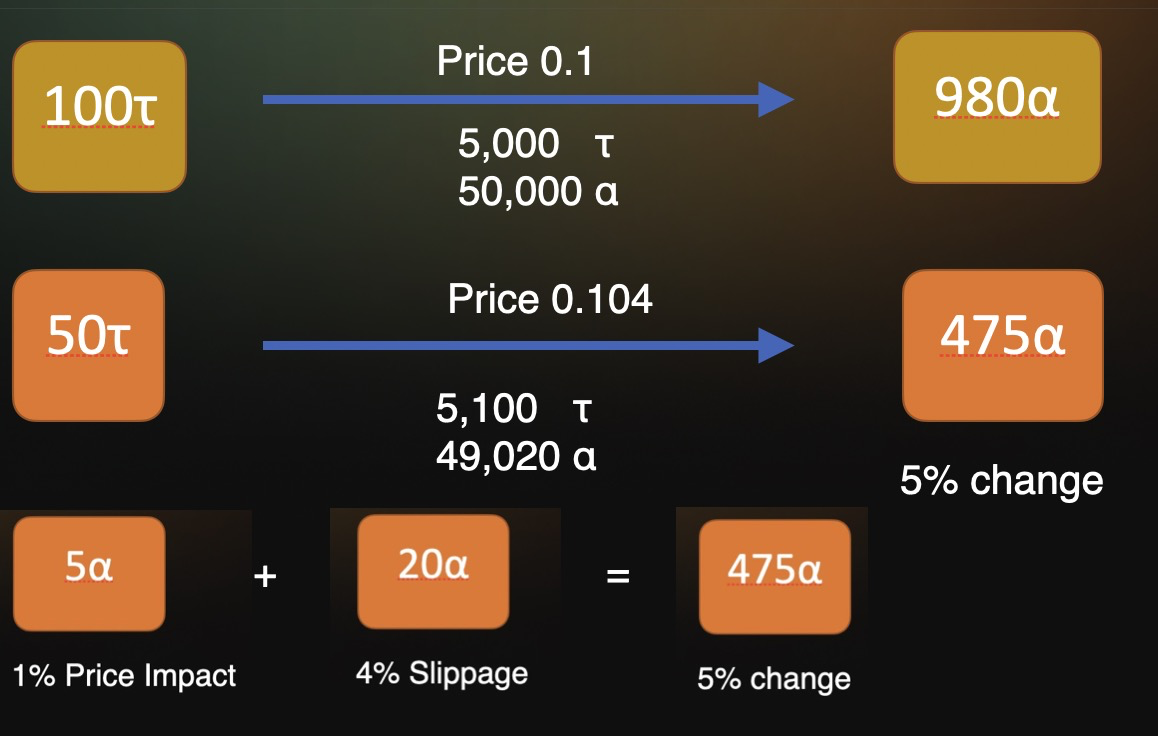
But a large transaction in front of this one adds slippage:
In this example, 4% of the transaction is lost to slippage.
This is what the MEV bots do.
First fix: Limits
All transactions should set a slippage limit. This means - "hey, the price is x, and I am ok with a change of y% for the transaction."
The slippage limit should be small - a 4% slippage limit in the example above cost 20 alpha (~ 2 tao). For high liquidity subnets, you can be well below 1%.
The MEV bots calculate their MAX extraction on every transaction
f your limit is very loose - the bot may decide to attack your transaction.
If you have no limit set: The MEV bots can extract as much as they want.

MEVShield
While a tight limit price on your transfer should be enough to stop MevBots, the chain has also launched MevShield.
Currently in version 1.0: Mevshield encrypts your transfer, so that the MEVbot cannot read the details. ON the next block, your transaction is decrypted and processed.
Advantages:
By encrypting the transaction, the MEVBot cannot see what you have done, and therefore cannot schedule a transaction in front of your trade.
Disadvantages
Each transaction using MEVShield must be signed twice:
- Sign the transaction
- sign the encryption wrapper.
Taostats (and other providers) now offers the ability to sign the encryption wrapper to save double password entry.
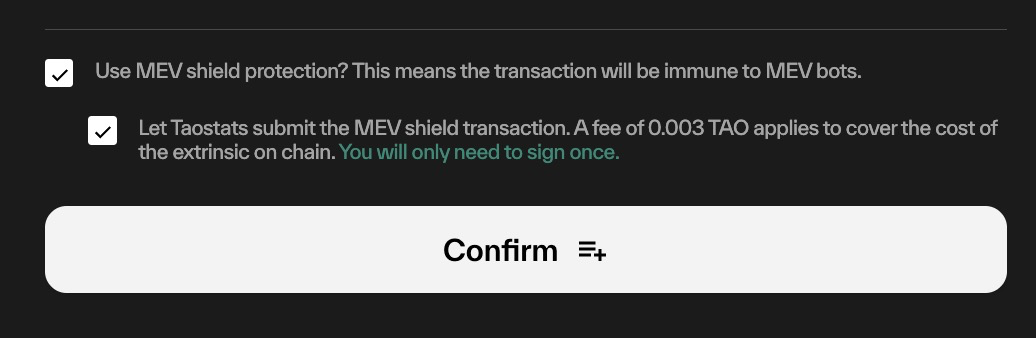
MevShield 2.0 is in development with more enhancements.
Why does Taostats disable MevShield for transactions <1 tao?
<1 tao?For transactions <1 tao, you are not likely going to be mevved - the potential gain for the attackers is too small compared to the risk.
Why does taostats disable MevShield for root stakes?
Root staking has no price impact or slippage you cannot be mevved on a root transaction - so no need for 2 signatures.
Updated about 1 month ago