
What is a Subnet Liquidity Pool?
Subnet pools are liquidity pools that are used to exchange tao for alpha tokens
A subnet pool (AKA liquidity pool) is a way to exchange between two currencies. In the case of subnet pools, they are used to exchange tao into the subnet's alpha token. There are two values in the subnet pool: alpha_in and tao_in
- alpha_in: The amount of alpha currently in the subnet pool
- tao_in: The amount to tao currently in the subnet pool.
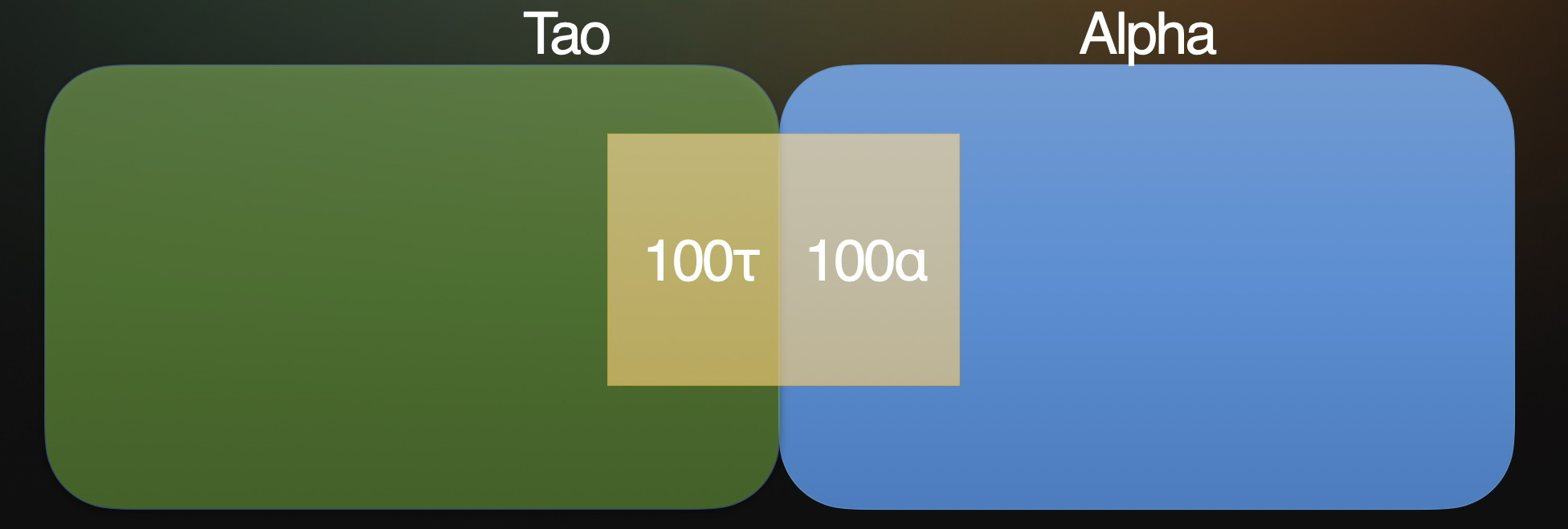
Inside the pool, the tao/alpha ratio sets the price. In the simplest case the pool behaves like a constant-product AMM — the product of the two reserves is a constant k:
Example subnet pool (shown in yellow) with 100τ and 100α.k = 100* 100 = 10,000
Emissions
Each block, tao and alpha are emitted into the liquidity pool.
Note that the value of k will change with each block as a result of this emission.
Alpha Price
The subnet pool determines the alpha price (shown in tao).

If there is 100 tao_in, and 100 alpha_in, the α_price will be 1 tao.
Subnet Pool Initialization
When a new subnet is registered, the pool is seeded from the registration cost: a portion of the lock cost is paid in as TAO (tao_in), and a matching amount of alpha is minted (alpha_in) to set the opening price. The remainder of the lock cost is recycled. The starting alpha_price is therefore the ratio of the seeded reserves.
Updated about 1 month ago