
taostats-for-miners
If you are thinking about mining on Bittensor - or you want to improve your mining nodes, Taostats has a wealth of information to help you get started.
When looking at your miner's activity in taostats - there are probably a few different ways you want to interact:
- The metagraph to see how your miner(s) are doing in relation to the other neurons.
- Coldkey view: A view of all your miners in one place.
- Hotkey view: A detailed view of a specific miner.
The metagraph: for miners
Each subnet publishes a Metagraph - a giant table of data about each node. See Subnet Metagraph table for details on how to best sort the metagraph, and how to read the data.
The columns most relevant to miners are trust, incentive and emission.
- Trust: Scored by validators on how "trustworthy" your results are. What this means varies from Subnet to Subnet.
- Incentive: The percentage of miner emission that will be awarded to each miner. The sum of this column is 1.
- Emission: This is the tao awarded each epoch. This is calculated from the incentive and the miner's share of emissions. Note that Emission is shown per epoch, or 360 blocks.
- Daily tao: Emission *20 (~ 20 epochs per day). Note: This is an instantaneous calculation - not a predictor.
- Daily$: is daily tao * current price of tao. Note: This is an instantaneous calculation - not a predictor.

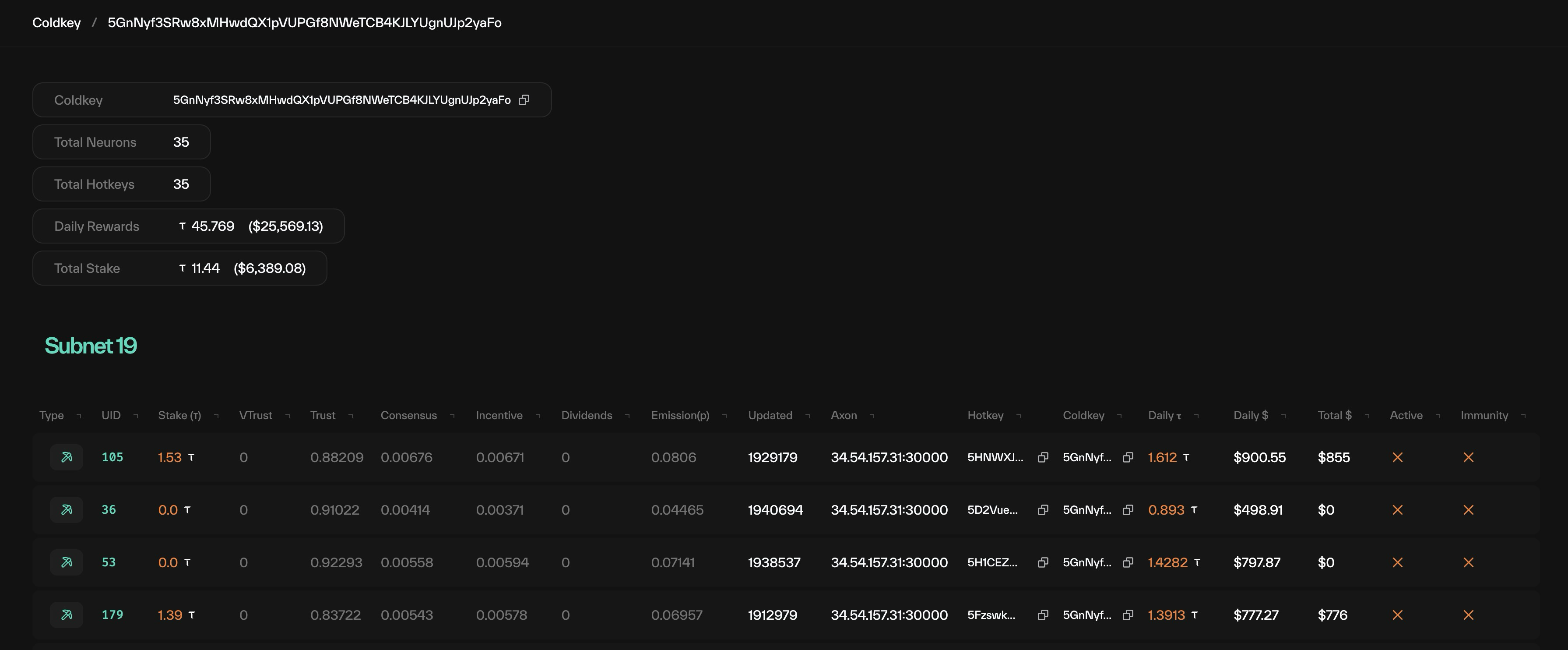
ColdKey View
The Coldkey view in taostats will show details about a specific coldkey wallet, including details about any active hotkeys. https://taostats.io/coldkey/<your coldkey> to see your miner's data.
Registering a node
To mine, you need to know how competitive a subnet is, how much it costs to register a node on the subnet, and how the subnet distributes emissions to miners. Register a node using the Command Line Tool"
btcli subnet registerSubnet emissions
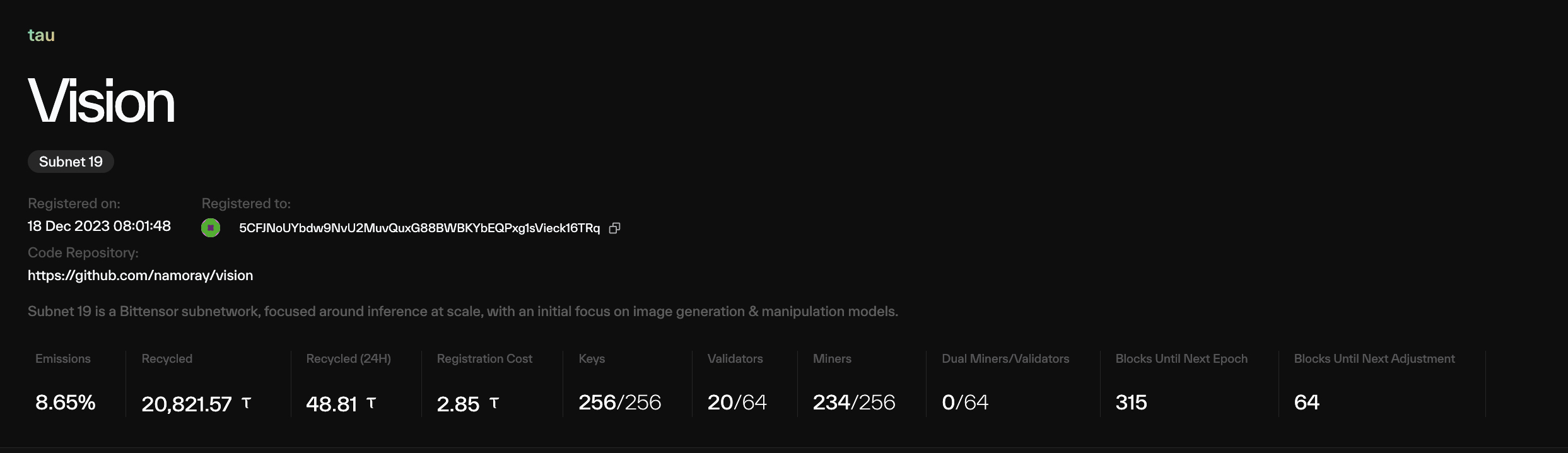
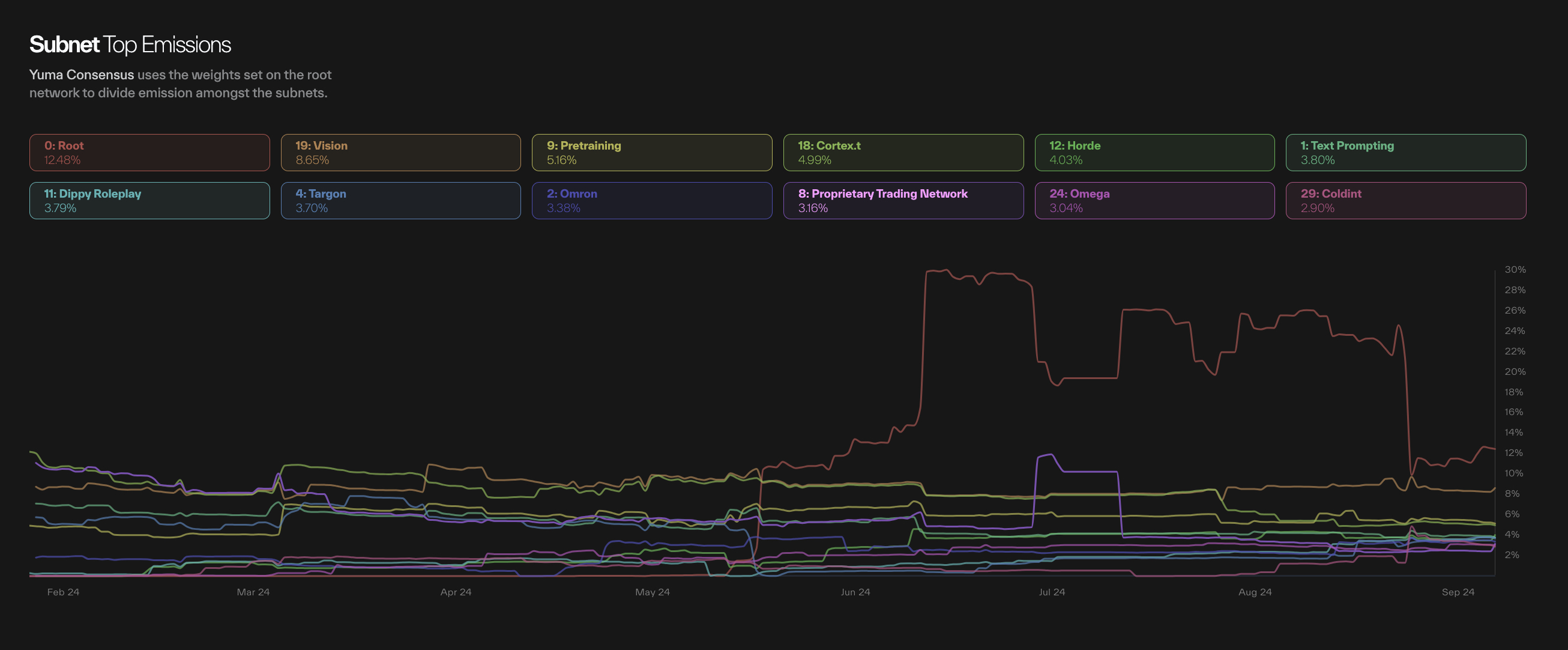
Each subnet is granted a percentage of the blockchain emission. High-emission subnets are more profitable, but also more competitive. Miners receive 41% of the emission for the subnet. The emission for each subnet can be found in multiple places in taostats:
-
Subnet pages
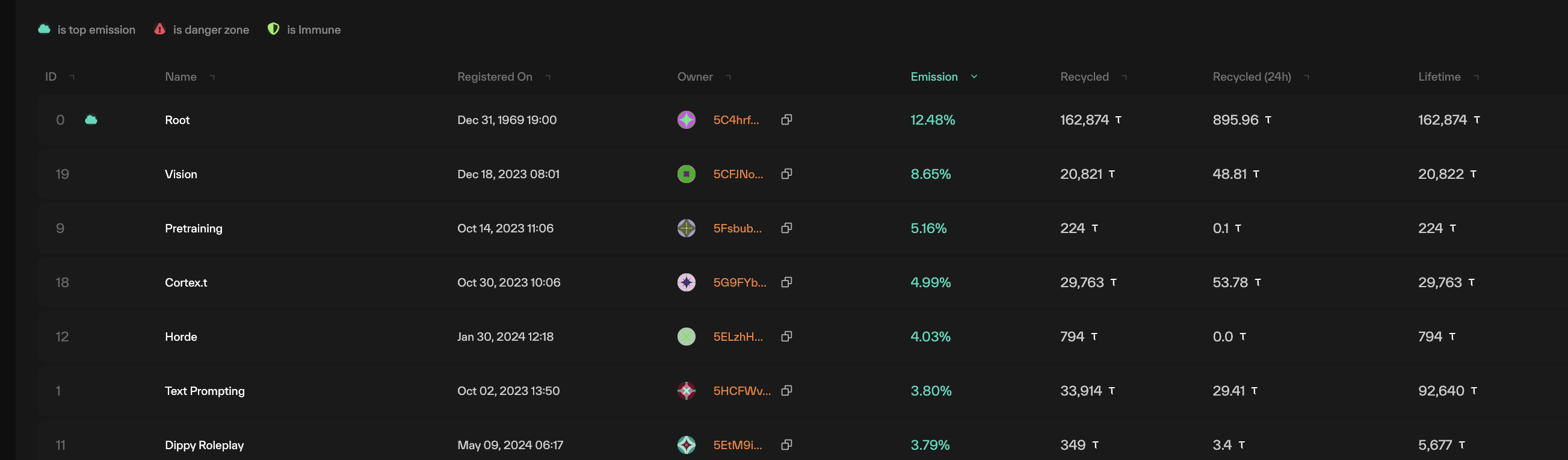
- taostats.io homepage:
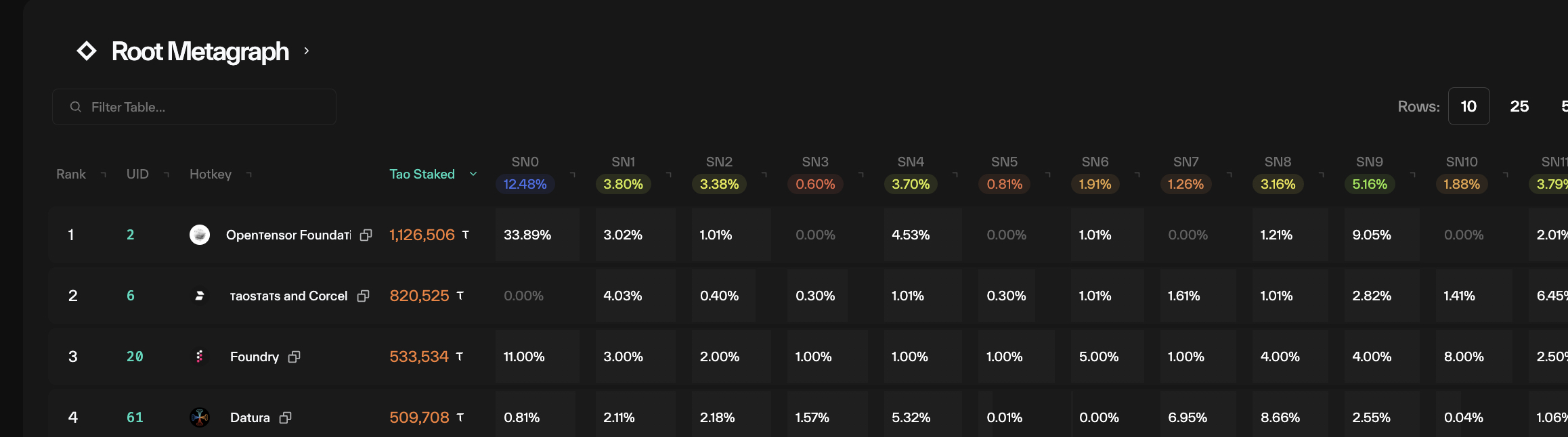
Miner Incentive distribution
Subnets with higher emissions tend to be more competitive for miners, meaning that the risk of being deregistered is high. The competitiveness of a subnet can be seen on subnetindividual subnets distribution graphs. For example:
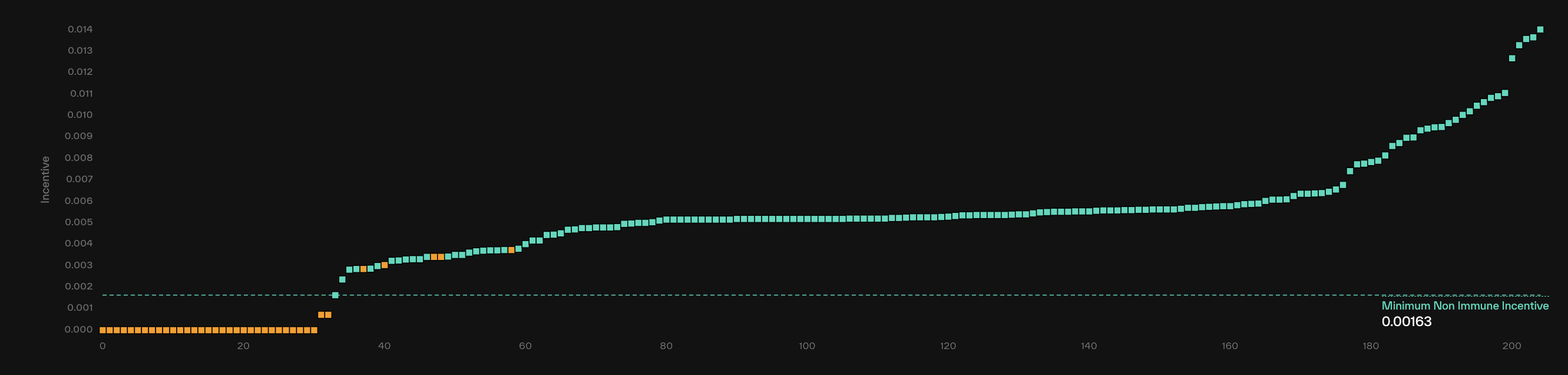
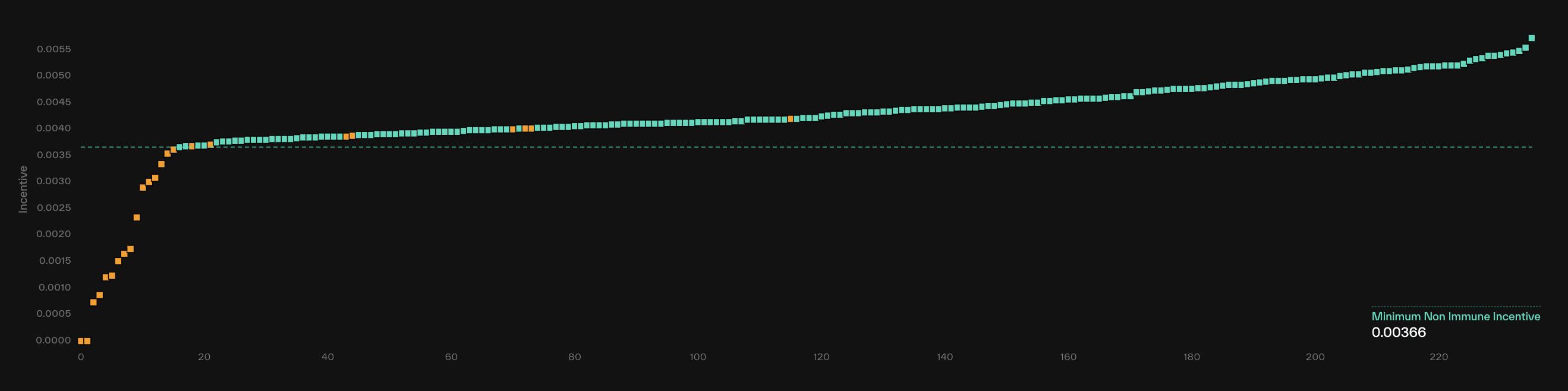
In the first screenshot, there is a large distribution of emissions. In this subnet, a well-performing miner can keep above the threshold for de-registration.
In the second screenshot, the range for Active keys is very narrow (0.00401 - 0.00441). Any minor disruption to your miner may cause you to fall to the bottom of the emissions chart and be deregistered.
Node Registration cost
You can view the current registration cost at https://taostats.io/subnets/netuid-<subnetID>/#registration. Competitive subnets generally cost more to register a node than non-competitive nodes.
Deregistration
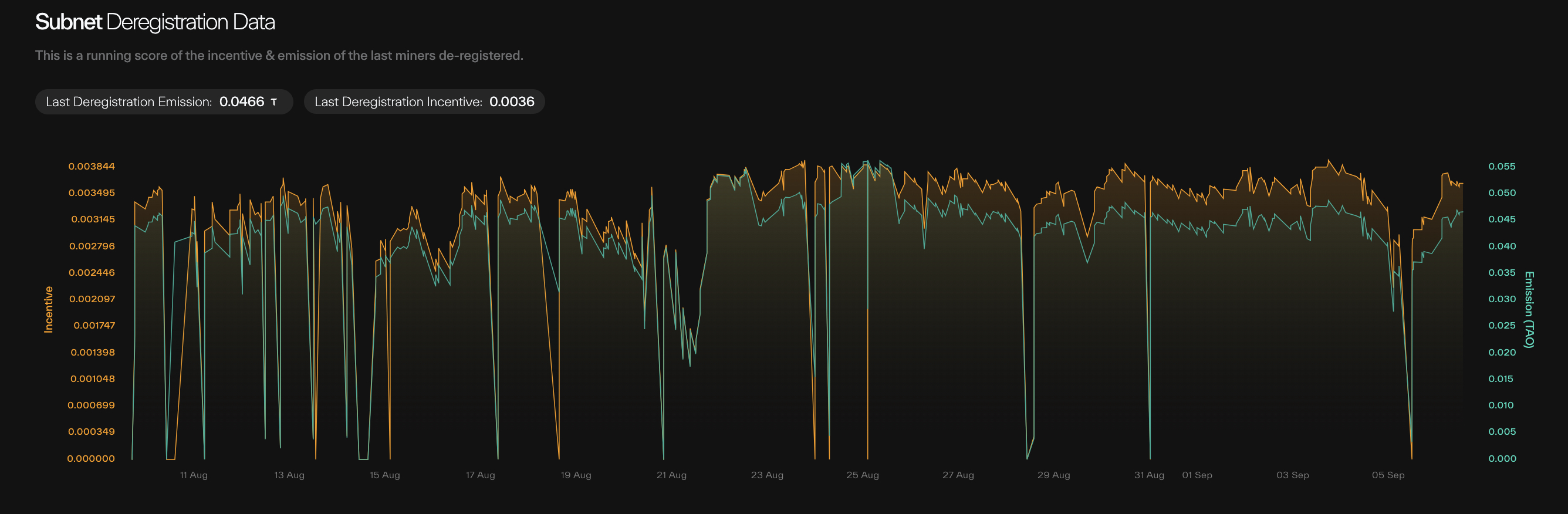
When a new miner is registered, the lowest miner out of immunity is deregistered. Any new miner should aim to be above the last deregistration incentive before they exit immunity.
Immunity period
Each new node is granted immunity for a defined number of blocks. When you have immunity, you cannot be de-registered. The Node Registration page describes how to use the BTCLI to determine a subnet's immunity period.
Emission Distribution
Some subnets evenly distribute emissions to all miners based on the trust value calculated by Yuma Consensus, while others may limit emissions. For example, Subnet 6 currently only distributes emissions to the top x miners:
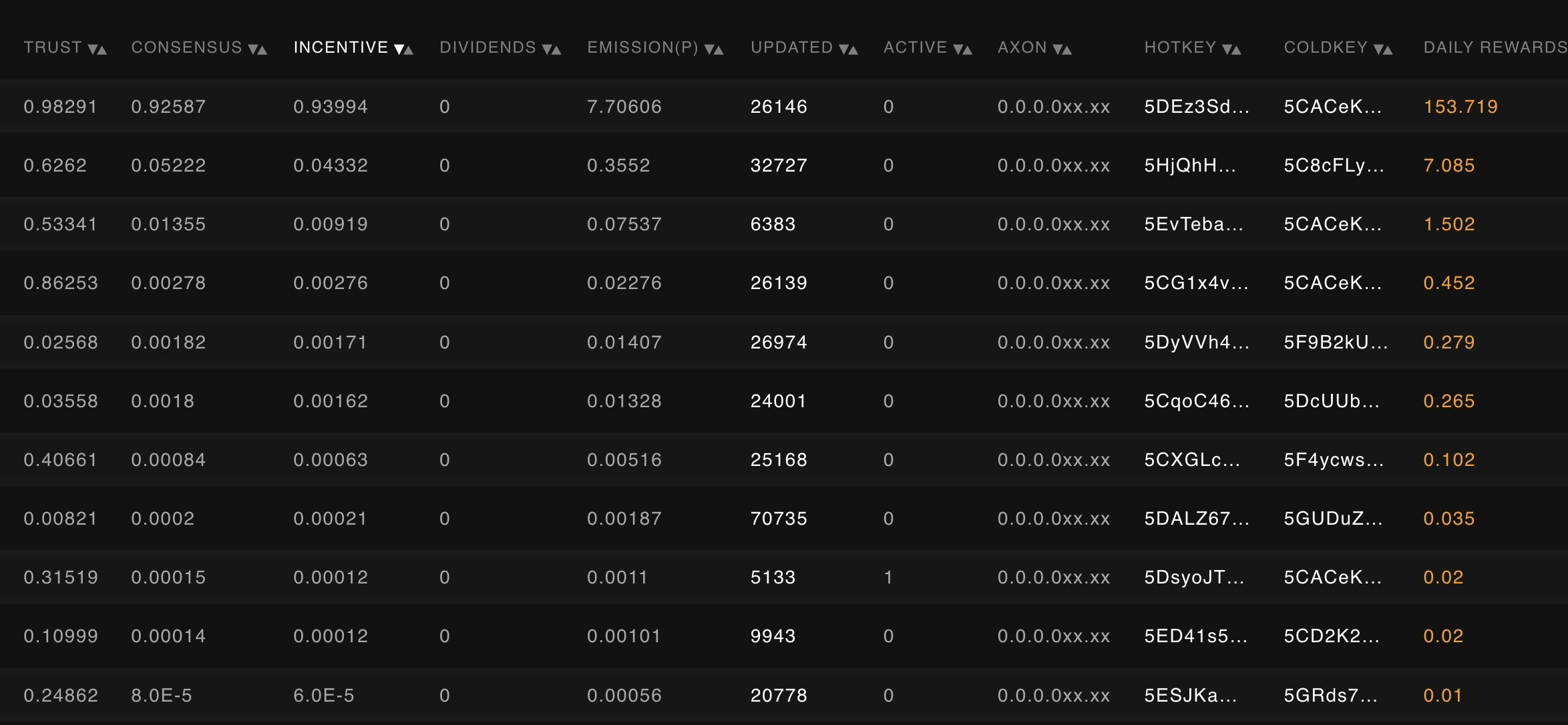
Learning to read the Subnet Metagraph table is a helpful step to better understand emission distribution.
See Subnet emission overview for a description of how tao is allocated to miners.
De-registration
The registration tab for each subnet lists the number of registrations in the last 24 hours. Assuming a full subnet - this is equal to the number of de-registrations.
https://taostats.io/subnets/netuid-<subnetID>/#registration
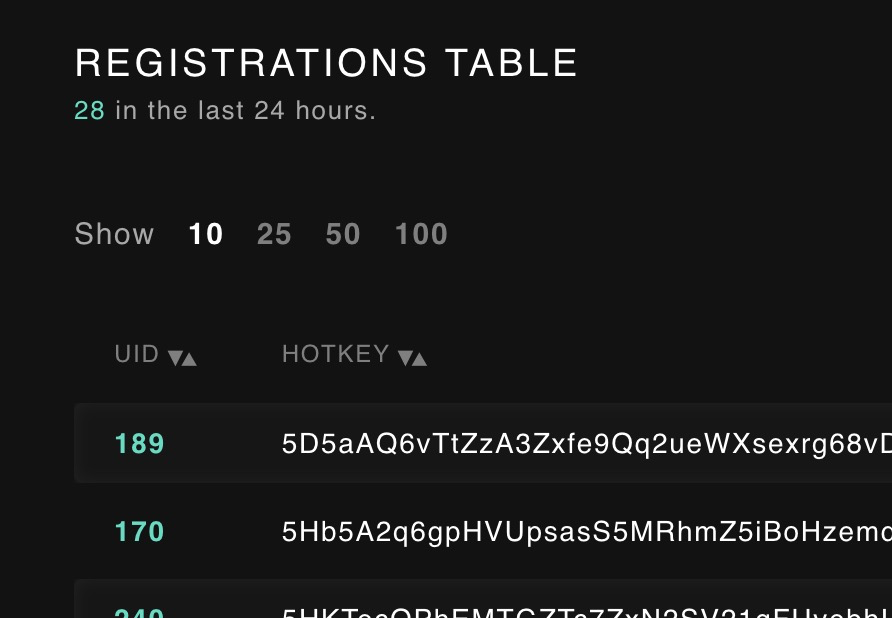
The new miners will have immunity for a set period, so a large number of new registrations will push your miner closer to the bottom of the incentive list (by percentage). Each subnet has a different immunity period, which
If you know your miner's emission value, it is possible to mouse over the incentive chart to see where you stand:
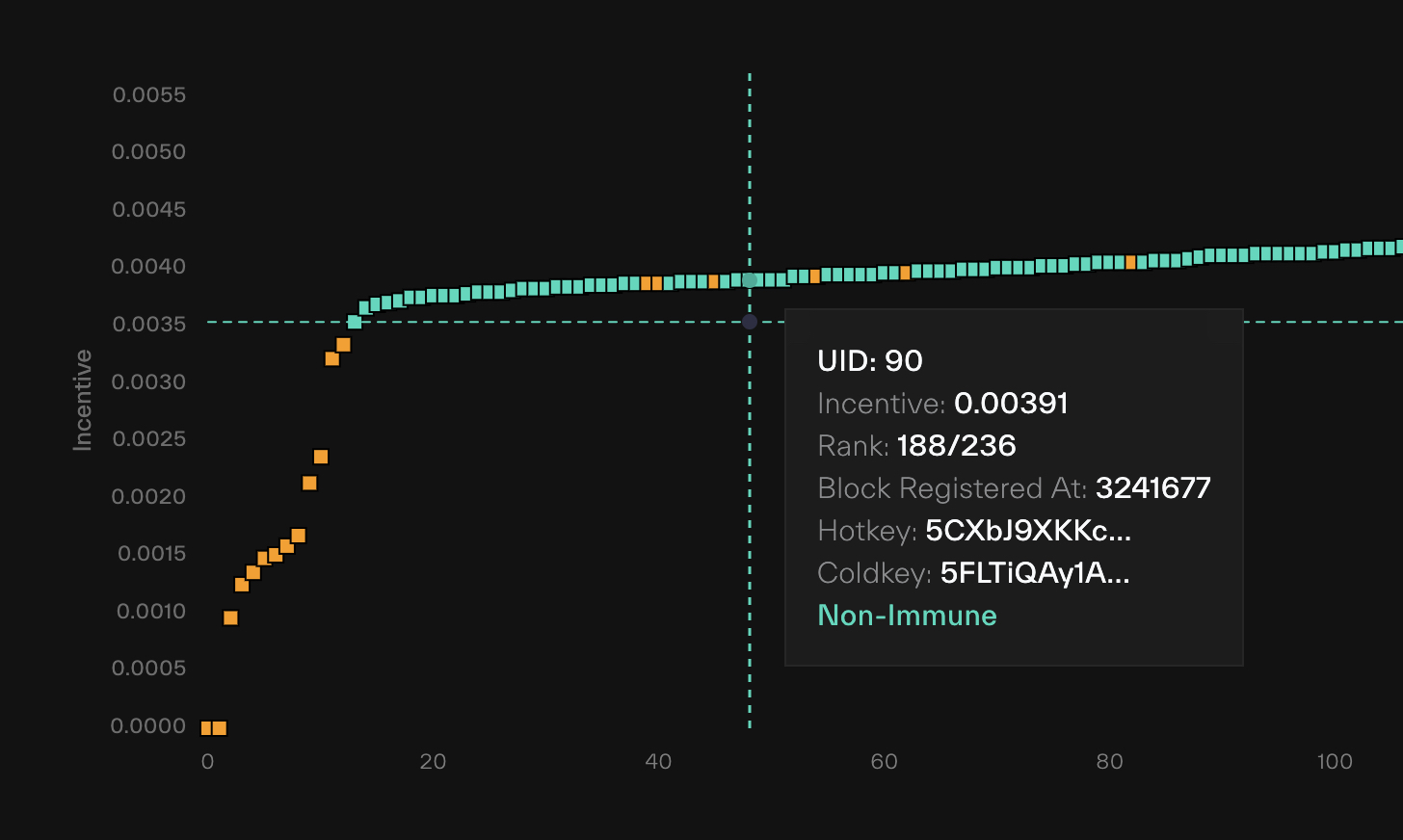
Sort the metagraph by incentive (increasing) show 100 entries at a time.If your miner appears here, you are in the bottom 100 miners (note that all the validators also appear in this list)
This view will also show miners with immunity, so depending on the competitiveness of the Subnet, miners on this view are very close to being de-registered.
Updated 22 days ago